
A Flatford Mill visit is about 20 minutes by car from Colchester, following the A12 north and leaving at East Bergholt in Suffolk, where the River Stour marks the county boundary. The hamlet is small enough to walk end to end in ten minutes, and everything worth seeing sits within reach of the car park. What brings people here is the concentration of landscape it produced: John Constable grew up at East Bergholt, his father owned the mill, and almost every painting that made his reputation was drawn from this particular stretch of riverbank. 2026 marks the 250th anniversary of John Constable's birth, and the National Trust has arranged a programme of exhibitions and events at Flatford through the year.
The site is not large. A half-day is enough to see everything, and many visitors combine it with Dedham, which sits a mile and a half upstream on the Essex side of the Stour and has a village character worth stopping for on the way back.
Table of Contents

What is Flatford?
A Flatford Mill visit centres on a small hamlet in the parish of East Bergholt, about 10 miles from Colchester across the county boundary into Suffolk. It sits on the south bank of the River Stour, with the water meadows of Dedham Vale spreading out around it and the low Suffolk countryside rising gently on both sides. The mill, Willy Lott’s Cottage, and Bridge Cottage all belong to the National Trust and sit within a few hundred metres of each other.
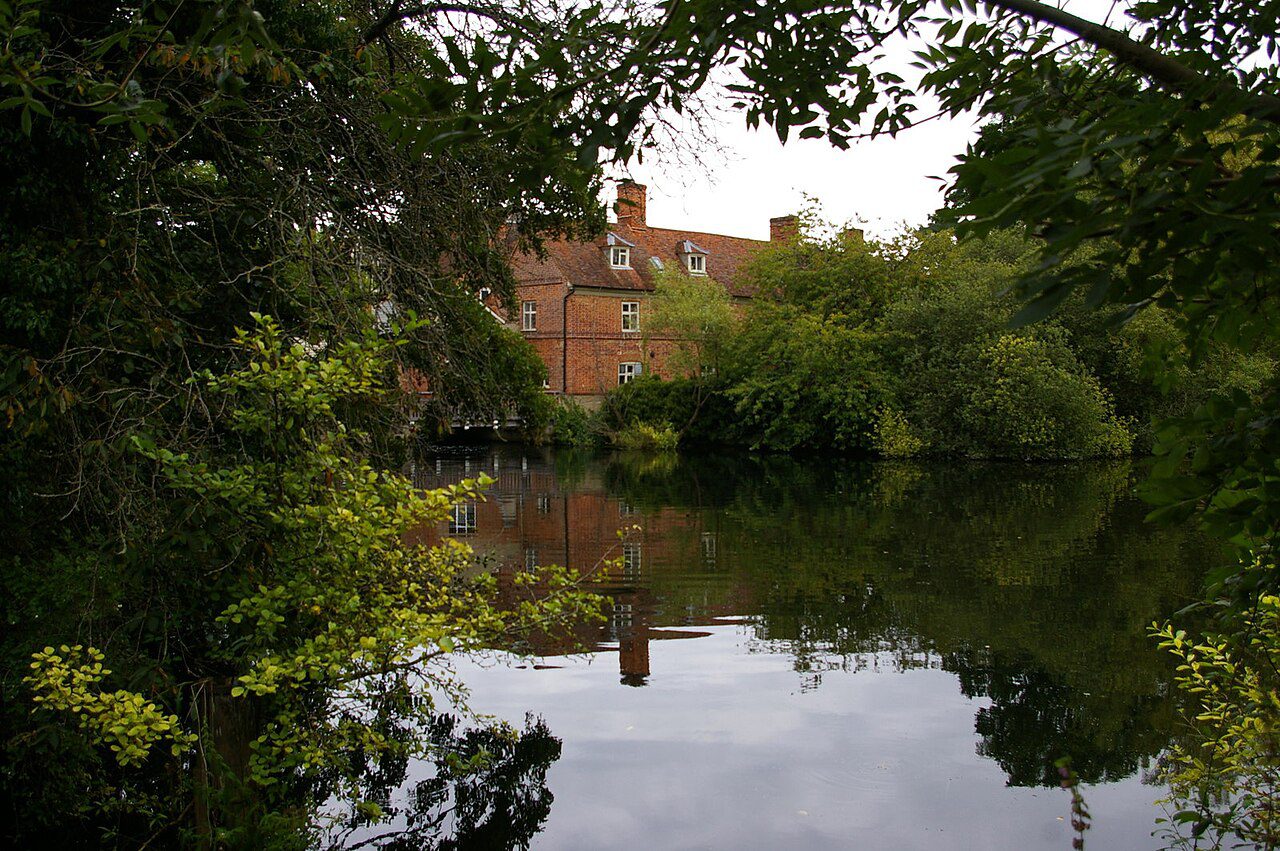
Flatford Mill itself is a Grade I listed watermill. According to the date-stone it was built in 1733, though parts of the structure may be older. It belonged to Golding Constable, the artist's father, and the young John Constable would have known it as a working building before it became the setting for some of the most reproduced landscapes in English art. The mill is now operated by the Field Studies Council as an education and residential centre, which means it is not open to casual visitors, but its exterior and the millpond view are freely accessible from the footpath alongside.
Willy Lott's Cottage sits just across the millpond from the main mill building. It is the structure in the left foreground of The Hay Wain, which Constable painted in 1821 from sketches made on this spot. When it was exhibited at the Royal Academy that year, the painting was shown under the title Landscape: Noon. The cottage is now a National Trust study accommodation property; its exterior, viewed from the river path or from the lane past the mill, is exactly the angle that appears in the painting.
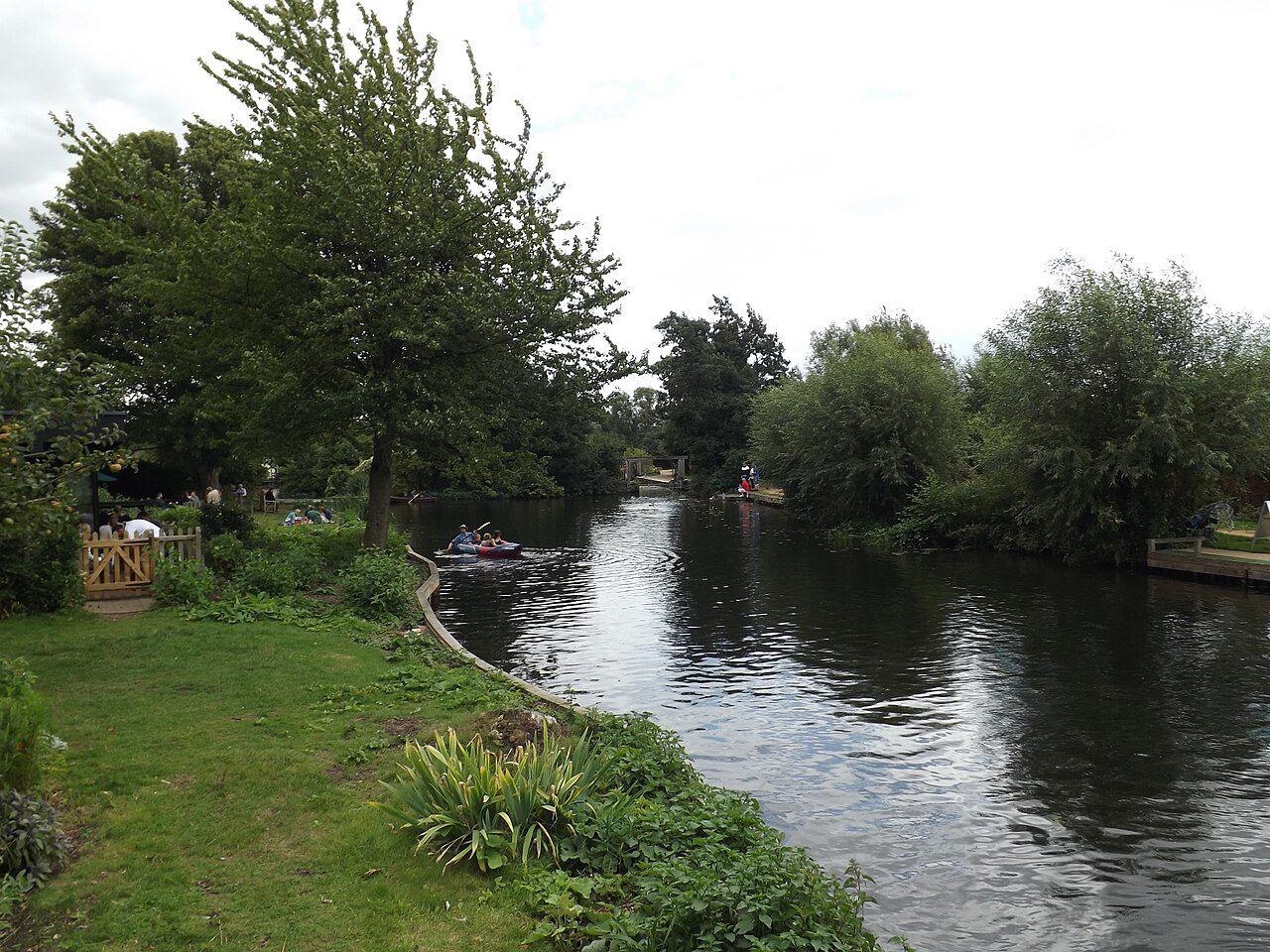
Bridge Cottage is a 16th-century thatched cottage a short walk along the riverbank from the mill. It houses the National Trust's Constable exhibition at Flatford, along with a shop and a tearoom with tables on the riverbank. Entry to the exhibition charges a small fee for non-members; the footpaths and riverside views are free to walk at any time.
Getting to Flatford from Colchester
The most direct route is the A12 north, leaving at the junction signed for East Bergholt, then following the brown heritage signs through the village and down to the car park at the end of Flatford Road. The drive takes around 20 minutes from Colchester town centre in ordinary traffic, though a Flatford Mill visit on summer weekend afternoons can run longer when the lane into the hamlet slows.
A Flatford Mill visit costs £5 for parking for non-National Trust members, and is free for members, with no overnight provision. The car park fills quickly on summer weekends and bank holidays, and the lane can become congested well before midday, so arriving before eleven is worth planning around if you are visiting in July or August.
There is no reliable public transport to Flatford itself. The nearest village with bus connections from Colchester is East Bergholt, from where it is about a mile's walk down the lane. Most visitors arrive by car, and for a day that includes both Flatford and Dedham, a car makes the logistics straightforward.
What to See and Do
Bridge Cottage and the Constable exhibition
Most Flatford Mill visit itineraries start at Bridge Cottage, which acts as the visitor hub for the National Trust site. The Constable exhibition inside covers his life and method of working, with context that helps you make sense of what you are looking at when you walk the paths outside. The tearoom alongside has garden seating on the riverbank and serves light meals and hot drinks; it is a sensible stopping point before or after the walk, though it gets busy on weekends.
The mill and Willy Lott's Cottage
From Bridge Cottage, a footpath leads across the bridge and around the millpond to where the mill and cottage face each other across the water. The view is immediately recognisable from the paintings, and it is genuinely interesting to stand in the place where the studies were made, to locate yourself in the composition. A Flatford Mill visit gives its closest angle on Willy Lott's Cottage from the lane past the mill, and the path along the far bank offers the wider framing that appears in the background of several of Constable's oil sketches.
On a summer weekend, the millpond view will not be a quiet experience, and if the choice is available, coming in the morning or in October, when the light on the water is different and the pace is slower, changes the character of the visit considerably.
Walking the River Stour
A longer Flatford Mill visit can take in the footpaths that connect to the Stour Valley Path, which runs the full length of the Stour between the Suffolk coast and Newmarket. The most-walked local route is the riverside path from Flatford to Dedham, about a mile and a half along the north bank, with the river on one side and open water meadows on the other. The surface is good near Flatford and becomes more uneven further on; it is manageable for most dogs and most walkers, though it does not suit pushchairs beyond the first section.
Dogs are welcome on the outdoor paths throughout. Keep them on leads near the millpond and in gated sections; the meadow paths give more room to move once you are past the main buildings.
Rowing boats on the river
Boat hire is available from the River Stour Trust and from the boatyard at Dedham, typically running from March to October. The Dedham boatyard has wooden rowing boats available from thirty minutes upwards. It is a five-minute drive from Flatford or a thirty-minute walk along the riverside path, so a Flatford Mill visit and a boat trip pair easily, and it offers a different angle on the same landscape: the Stour valley from water level, with the willows overhead and the water meadows on both banks.
Where to Stay
A Flatford Mill visit sits about 10 miles from Colchester, making it a natural half-day trip from either of the Colchester properties. Number 11 and The Round House are both close to the city centre with free parking, and the A12 is a few minutes away. A morning at Flatford, a stop at Dedham for lunch, and an afternoon back in Colchester is a well-paced day with room to breathe.
Both Colchester properties welcome dogs, which makes them a practical base if you are travelling with one. The walks around the site suit dogs on leads, and the paths between Flatford and Dedham give more room once you are out of the hamlet. If the Dedham Vale area is a focus for your stay, it is worth reading our guides to Dedham Vale walks and things to do in Dedham before you go.
The Wivenhoe properties are a little further from Flatford, at around 15 miles, but they place you well for the Stour valley and the Essex countryside. Secret Cottage and Queens Cottage are both dog-friendly with free parking, and a Flatford Mill visit combines well with a stay there, and Wivenhoe itself has a riverside character that suits the same kind of unhurried day that Flatford rewards.
All four properties have stairs that are steep by modern standards, which is worth knowing in advance if anyone in your group has mobility concerns.
You can book directly through the Clever Cottages website rather than through a booking platform for your Flatford Mill visit, which removes the platform fee for both sides.
Frequently Asked Questions
Is Flatford Mill free to visit?
Walking the grounds and footpaths on a Flatford Mill visit is free. Parking costs £5 for non-National Trust members. The Constable exhibition inside Bridge Cottage charges a small entry fee; National Trust members enter free.
Is Flatford dog-friendly?
Dogs are welcome on the outdoor footpaths around the site, including the riverside walk between Flatford and Dedham. They are not permitted inside Bridge Cottage or the exhibition spaces. The meadow paths between Flatford and Dedham give more room once you are past the main buildings.
How far is Flatford from Colchester?
A Flatford Mill visit is about 10 miles from Colchester, roughly 20 minutes by car via the A12 north. It sits in the parish of East Bergholt, across the Essex border in Suffolk.
Is 2026 a good time to visit Flatford?
2026 marks the 250th anniversary of John Constable’s birth, and the National Trust has arranged a programme of special exhibitions and events at Flatford through the year to mark it. If Constable’s work is part of your interest in the visit, this is a year worth prioritising.
Planning a visit to Wivenhoe and Colchester?
Get our free local guide, written by the owners of four dog-friendly cottages in the area.
Or browse our cottages in Wivenhoe and Colchester if you are looking for somewhere to stay.